A dark, abstract image with varying tones and a smooth gradient effect, creating a serene atmosphere.

Why it stands apart

Designed for the realities of maritime operations — not retrofitted from a generic AP tool.

01

Built for maritime complexity

Handles vessel-confirmed quantities, partial deliveries, group structures, and complex technical invoices.

02

Ecosystem-powered intelligence

Uses transaction history, compliance data, port context, and payment-validation signals from across Marcura.

03

From PO to payment

Extends beyond extraction and approval into exception control, compliance, and secure payment.

04

Embedded compliance

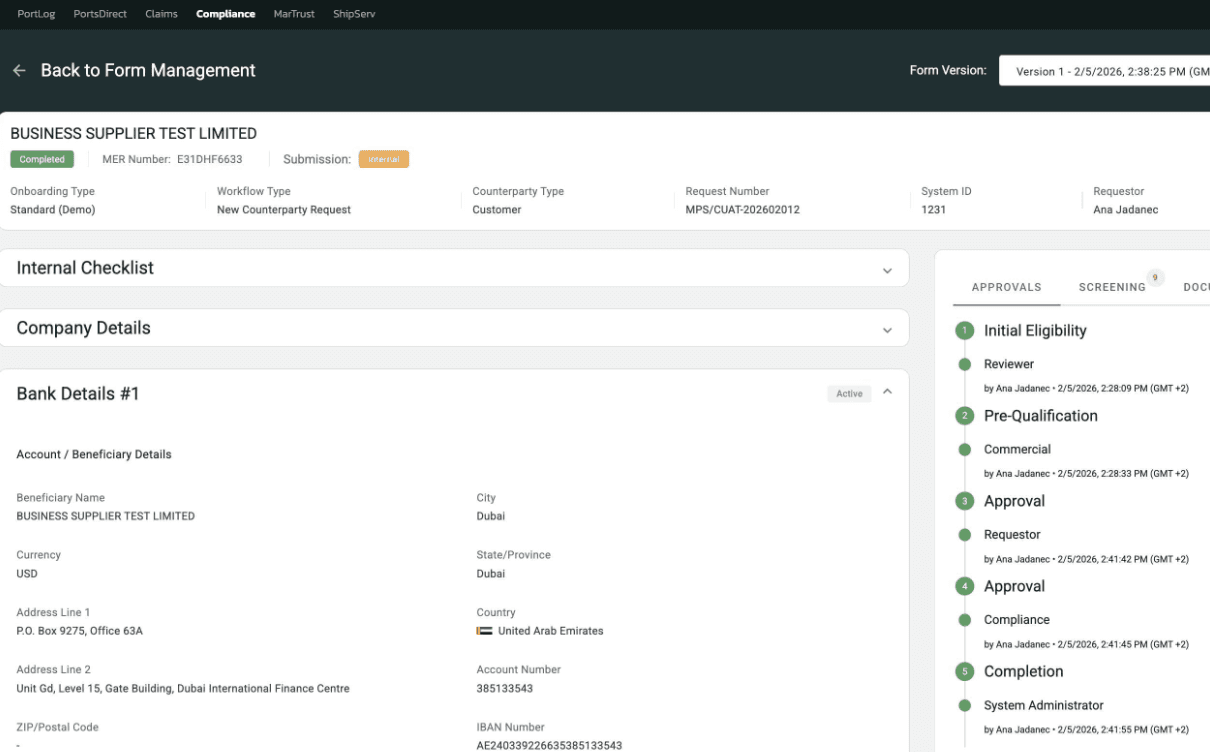
Vendor screening, sanctions checks, and bank verification are built into the approval path.

How it works

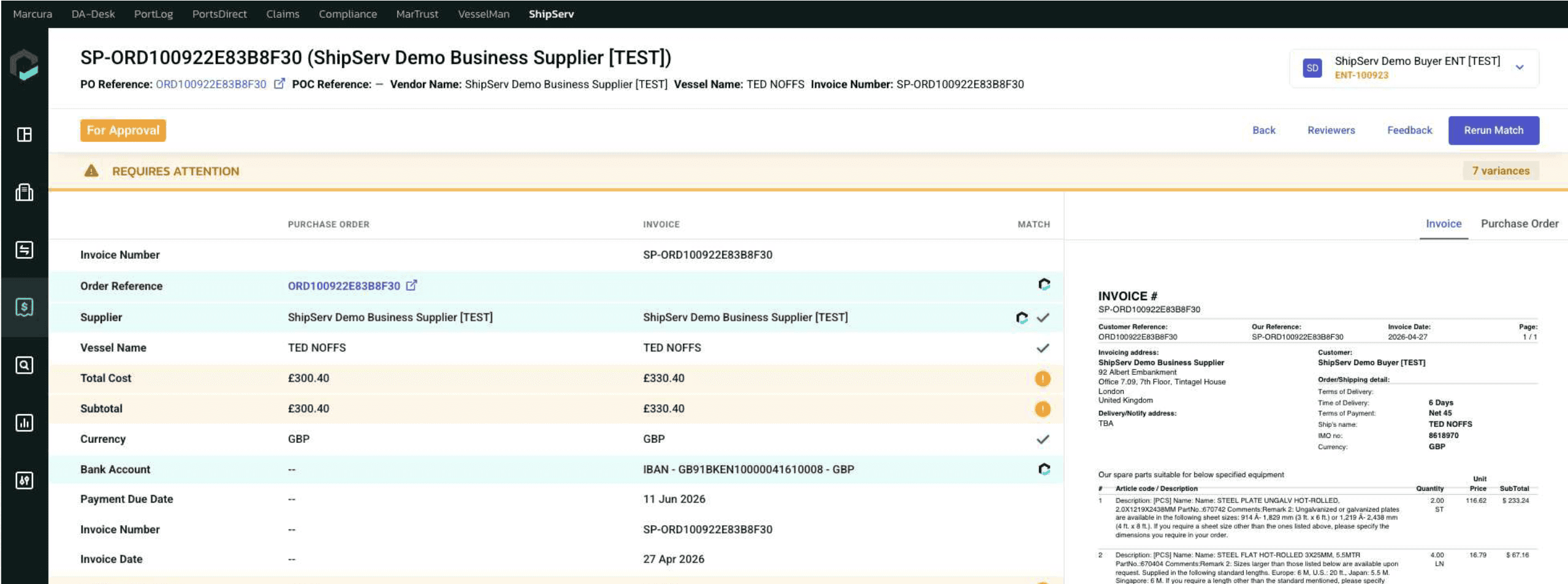
Six governed stages from invoice receipt to settled payment — with supplier collaboration built in from the start.

01

02

03

04

05

06

Invoice ingestion — From emails, PDFs, and suppliers portal
Extract — AI-assisted
Match — Up to 4-way
Match — Up to 4-way
Manage variance — Resolve exceptions
Enforce compliance — Centralised control over supplier risks
Execute payment — Optional add-on

Step 1

Step 2

Step 3

Step 4

Step 5

Step 6

A smooth, oval shape with a gradient of light blue to white, set against a gray background.
Decorative blurred teal gradient

Our Marcura certifications & attestations

The certifications and attestations your compliance and security teams expect — independently audited and continuously upheld.

Standards and Frameworks

GDPR European Union badge

GDPR
LRQA assurance logo
LRQA
TenIntelligence logo
Ten Intelligence

Certifications & Attestations

ISO 9001 certified badge
ISO 9001

Certified

ISO 27001 certification badge
ISO 27001

Certified

ISO 45001 health and safety certification badge
ISO 45001

Certified

ISAE 3402 assurance standard badge
ISAE 3402

Certified

ISO 14001 environmental management badge
ISO 14001

Certified

Your questions, answered

How does the workflow handle vessel-side discrepancies?

A specific answer describes the exact logic for each scenario, data sources, match path, exception routing. A general answer about configurability indicates the edge cases may land with the AP team.

What does the reviewer actually see when an exception is flagged?

Confidence scoring with visible reasoning is different from a binary flag. A system that learns from corrections compounds its value; one that doesn't will plateau at the same exception rate regardless of volume processed.

What happens after invoice approval?

Most AP tools stop at approval and return the invoice to whoever handles payment — which usually means re-entering it into a bank portal, running compliance checks separately, and picking it back up manually. The question is whether the solution closes that loop or creates a new handoff.

What happens if supplier bank details change before payment?

Change detection before each payment run is a critical component of effective fraud prevention. Who validates the payee details and who controls the final release of funds is the question that separates a compliance 'tickbox' from a compliance gate.

How quickly can a payment be traced back to the originating operational context?

A supplier says they haven't been paid, or the amount is wrong, or it's gone to an old account. In most AP setups, answering that question means going into the ERP, then the bank, then email, and hoping the trail holds together. A good answer here describes a single place where the payment, the approval, the PO, and the voyage are all connected.

Where do compliance checks sit inside the workflow?

Sanctions screening and bank-account verification should run as sequential gates in the matching and payment workflow. Reference to compliance integrations, configurable screening rules, or third-party sanctions data feeds without specifying where in the workflow the check fires are a red flag.

What happens when suppliers continue using email instead of portals?

If a separate workflow exists for email-submitted invoices, the benefit from automation is contingent on portal adoption rates that implementation teams will typically project optimistically.

Your questions, answered

How does the workflow handle vessel-side discrepancies?

A specific answer describes the exact logic for each scenario, data sources, match path, exception routing. A general answer about configurability indicates the edge cases may land with the AP team.

What does the reviewer actually see when an exception is flagged?

Confidence scoring with visible reasoning is different from a binary flag. A system that learns from corrections compounds its value; one that doesn't will plateau at the same exception rate regardless of volume processed.

What happens after invoice approval?

Most AP tools stop at approval and return the invoice to whoever handles payment — which usually means re-entering it into a bank portal, running compliance checks separately, and picking it back up manually. The question is whether the solution closes that loop or creates a new handoff.

What happens if supplier bank details change before payment?

Change detection before each payment run is a critical component of effective fraud prevention. Who validates the payee details and who controls the final release of funds is the question that separates a compliance 'tickbox' from a compliance gate.

How quickly can a payment be traced back to the originating operational context?

A supplier says they haven't been paid, or the amount is wrong, or it's gone to an old account. In most AP setups, answering that question means going into the ERP, then the bank, then email, and hoping the trail holds together. A good answer here describes a single place where the payment, the approval, the PO, and the voyage are all connected.

Where do compliance checks sit inside the workflow?

Sanctions screening and bank-account verification should run as sequential gates in the matching and payment workflow. Reference to compliance integrations, configurable screening rules, or third-party sanctions data feeds without specifying where in the workflow the check fires are a red flag.

What happens when suppliers continue using email instead of portals?

If a separate workflow exists for email-submitted invoices, the benefit from automation is contingent on portal adoption rates that implementation teams will typically project optimistically.

Your questions, answered

How does the workflow handle vessel-side discrepancies?

A specific answer describes the exact logic for each scenario, data sources, match path, exception routing. A general answer about configurability indicates the edge cases may land with the AP team.

What does the reviewer actually see when an exception is flagged?

Confidence scoring with visible reasoning is different from a binary flag. A system that learns from corrections compounds its value; one that doesn't will plateau at the same exception rate regardless of volume processed.

What happens after invoice approval?

Most AP tools stop at approval and return the invoice to whoever handles payment — which usually means re-entering it into a bank portal, running compliance checks separately, and picking it back up manually. The question is whether the solution closes that loop or creates a new handoff.

What happens if supplier bank details change before payment?

Change detection before each payment run is a critical component of effective fraud prevention. Who validates the payee details and who controls the final release of funds is the question that separates a compliance 'tickbox' from a compliance gate.

How quickly can a payment be traced back to the originating operational context?

A supplier says they haven't been paid, or the amount is wrong, or it's gone to an old account. In most AP setups, answering that question means going into the ERP, then the bank, then email, and hoping the trail holds together. A good answer here describes a single place where the payment, the approval, the PO, and the voyage are all connected.

Where do compliance checks sit inside the workflow?

Sanctions screening and bank-account verification should run as sequential gates in the matching and payment workflow. Reference to compliance integrations, configurable screening rules, or third-party sanctions data feeds without specifying where in the workflow the check fires are a red flag.

What happens when suppliers continue using email instead of portals?

If a separate workflow exists for email-submitted invoices, the benefit from automation is contingent on portal adoption rates that implementation teams will typically project optimistically.

Your questions, answered

How does the workflow handle vessel-side discrepancies?

A specific answer describes the exact logic for each scenario, data sources, match path, exception routing. A general answer about configurability indicates the edge cases may land with the AP team.

What does the reviewer actually see when an exception is flagged?

Confidence scoring with visible reasoning is different from a binary flag. A system that learns from corrections compounds its value; one that doesn't will plateau at the same exception rate regardless of volume processed.

What happens after invoice approval?

Most AP tools stop at approval and return the invoice to whoever handles payment — which usually means re-entering it into a bank portal, running compliance checks separately, and picking it back up manually. The question is whether the solution closes that loop or creates a new handoff.

What happens if supplier bank details change before payment?

Change detection before each payment run is a critical component of effective fraud prevention. Who validates the payee details and who controls the final release of funds is the question that separates a compliance 'tickbox' from a compliance gate.

How quickly can a payment be traced back to the originating operational context?

A supplier says they haven't been paid, or the amount is wrong, or it's gone to an old account. In most AP setups, answering that question means going into the ERP, then the bank, then email, and hoping the trail holds together. A good answer here describes a single place where the payment, the approval, the PO, and the voyage are all connected.

Where do compliance checks sit inside the workflow?

Sanctions screening and bank-account verification should run as sequential gates in the matching and payment workflow. Reference to compliance integrations, configurable screening rules, or third-party sanctions data feeds without specifying where in the workflow the check fires are a red flag.

What happens when suppliers continue using email instead of portals?

If a separate workflow exists for email-submitted invoices, the benefit from automation is contingent on portal adoption rates that implementation teams will typically project optimistically.

Digital documents displaying data visuals and insights, with the title "Beyond the Model" prominently featured.

New guide

Take control of Procure-to-Pay

Why invoice control breaks down between PO and payment — and how leading ship managers close the gap. Free guide, plus two diagnostic tools.

brown concrete building near body of water during daytime

Get in touch with our team

Enter your email, and our maritime experts will reach out to you.

Get in touch with our team

Enter your email, and our maritime experts will reach out to you.

Get in touch with our team

Enter your email, and our maritime experts will reach out to you.

Get in touch with our team

Enter your email, and our maritime experts will reach out to you.

Products

Solutions

Marcura AI

Resources

Careers

Book a demo

Products

Solutions

Marcura AI

Resources

Careers

Book a demo
Event preview
Live webinar
One System for Every Drydocking, Repair, and Inspection
One cloud platform for drydockings, repairs, refits and inspections — with supplier sourcing and approvals built in.
Live webinar
One System for Every Drydocking, Repair, and Inspection
One cloud platform for drydockings, repairs, refits and inspections — with supplier sourcing and approvals built in.